
Focus Group Survey
Join the Conversation! Your opinions matter. Participate in our Focus Group Surv...
Use this Customer Satisfaction Survey Template to track customer sentiment at key journey moments and turn feedback into practical improvements. It helps CX, support, and product teams respond faster when satisfaction trends decline.
CSAT is one of the fastest ways to detect experience problems. A well-designed survey shows where satisfaction drops, which segments are affected, and what should be fixed first.
CSAT answers a specific question — how satisfied was the customer with this experience? — which makes it ideal for evaluating individual interactions and touchpoints. Two related metrics measure different things:
Mature CX programs run all three: CSAT after experiences, CES at friction-prone touchpoints, and NPS for periodic relationship health checks.
Send surveys immediately after specific touchpoints:
Avoid sending long after the experience, when recall quality drops.
Use a focused structure:
Use numerical scale questions for trend tracking and make your questions required only for critical fields.
Use channels matched to context:
Segment by touchpoint, plan type, and lifecycle stage with hidden variables. Use survey data analysis to identify recurring friction patterns and prioritize fixes by business impact.
Route recurring issues automatically through webhooks to keep ownership clear.
A support team may maintain strong average CSAT while one queue underperforms. Segment-level analysis can reveal that billing-related tickets have significantly lower satisfaction due to long handoff times.
In this case, the highest-impact fix is improving handoff workflow and response ownership, not broad support scripting changes.
Track these metrics after implementation:
These KPIs confirm whether feedback-driven changes are improving customer outcomes.
Review create survey, question library, and survey data analysis for setup and optimization. Then read best customer satisfaction survey questions, customer satisfaction index, customer feedback email examples, and survey design guide for implementation ideas.
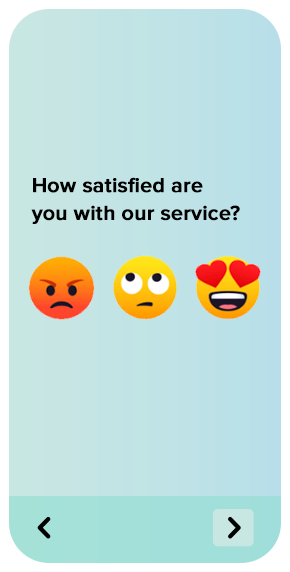
Here are examples of questions most commonly used in Customer Satisfaction Survey Template. When using our template, you can edit and adjust all the questions.

You can modify every question, delete or add more; there are 24 types of questions with options to select.
Make it looks like it's your own. Add branding of your organization and modify the theme to match the graphic standards of your brand.
Easily connect Responsly to apps that you're using. Use ready integrations to move data from Responsly to your apps automatically.
Connect tools that you are using, Responsly easily integrates with multiple apps.








You can modify this template in every possible way.
All templates work great on every device.
Use template Open form in a new window