
Training Satisfaction Survey
Share your thoughts on our training program!
Use this Employee Satisfaction Survey Template when you need a reliable snapshot of how employees feel about their day-to-day work experience.
It is designed for People Ops, HRBPs, and team leads who want to spot friction early and run a consistent improvement cycle.
Focus on practical satisfaction drivers:
Use a 1 to 5 scale from Strongly disagree to Strongly agree:
Open-ended prompt:
What is one change that would most improve your satisfaction at work this quarter?
Recommended cycle:
Create an Employee Satisfaction Index as the average of questions 1 to 10.
Use these practical thresholds:
Always segment by:
By Day 30
By Day 60
By Day 90
Use random order settings, matrix question design, and website embedding to operationalize your survey flow.
For deeper context, review employee engagement survey and measure and improve employee satisfaction.
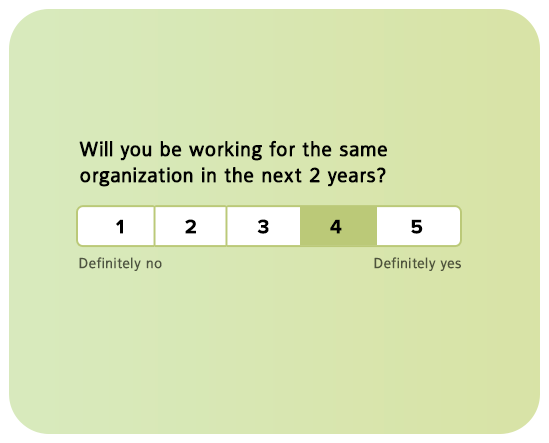
Here are examples of questions most commonly used in Employee Satisfaction Survey Template. When using our template, you can edit and adjust all the questions.
Remember that the survey is completely anonymous
Already near the end of the survey
We count on your sincere opinion

You can modify every question, delete or add more; there are 24 types of questions with options to select.
Make it looks like it's your own. Add branding of your organization and modify the theme to match the graphic standards of your brand.
Easily connect Responsly to apps that you're using. Use ready integrations to move data from Responsly to your apps automatically.
Connect tools that you are using, Responsly easily integrates with multiple apps.








You can modify this template in every possible way.
All templates work great on every device.
Use template Open form in a new window